Advanced Tools
Together, the processes listed under the Advanced Tools tab, involve the entire update process described above, except for the Identify SD and Upload partition data which are not part of the upgrade process.
In other words, this allows the user to submit the device to only one of the processes that is carried out during the entire update process.
These are detailed below:
File system
By selecting this option, the file memory of the connected device will be prepared for the update process.
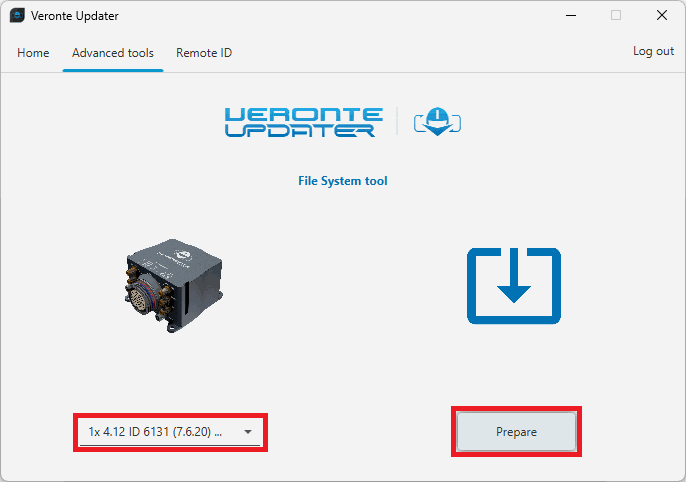
Simply, select the unit to be prepared and click Prepare:
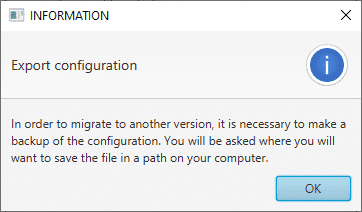
Before the process starts, users must save a back up of the current configuration.
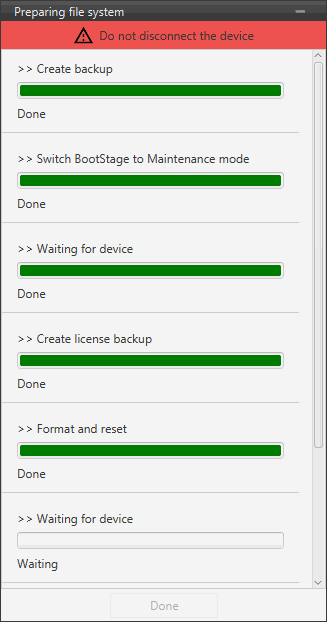
The preparation process will then start and the following windows will show the progress:
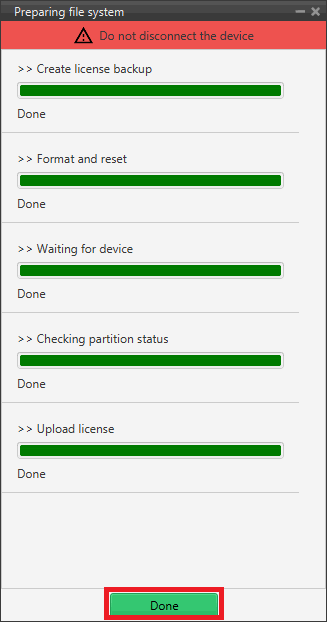
When finished, click on Done:
Erase firmware
By selecting this option, it is possible to erase the firmware from the connected device. The unit will remain in bootloader mode without firmware.
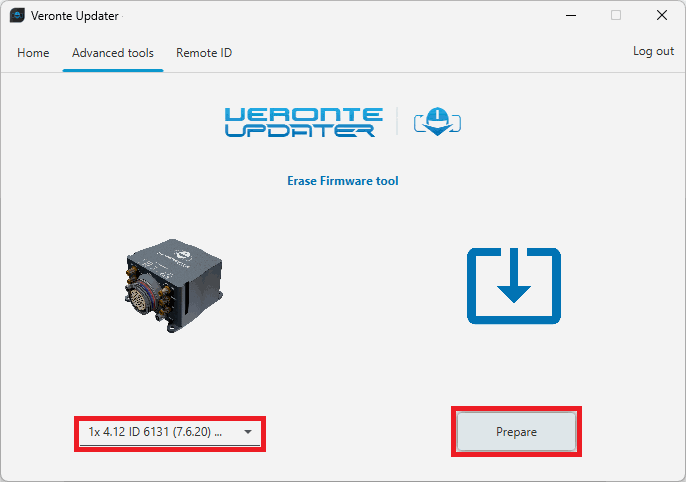
Click the Prepare button, and the process will begin.
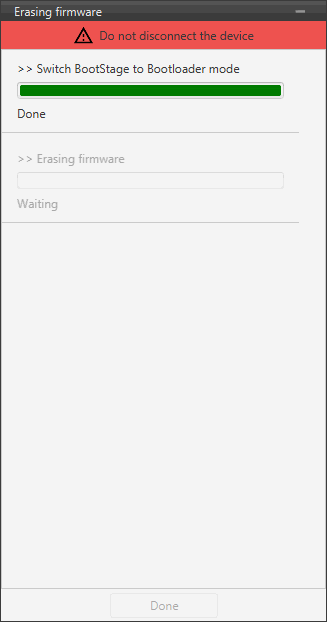
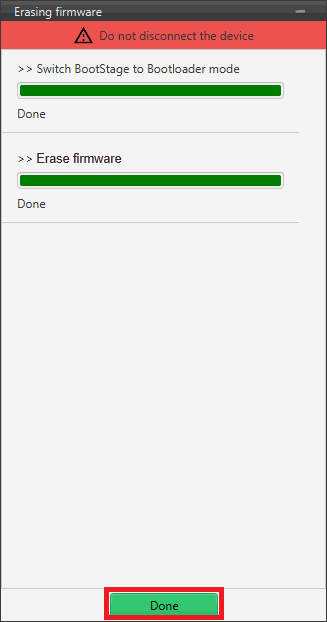
When finished, click on Done:
Upload backup
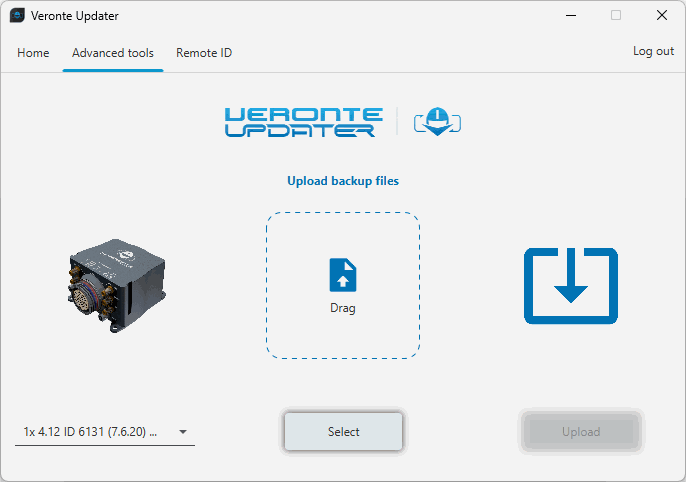
By selecting this option, users can upload the .backup file to the connected device.
-
Load the .backup file. There are two ways to do this, dragging the file to the Drag area or by using the Select button.
The latter option will open the following browser to select the .backup file stored in the user's local storage:
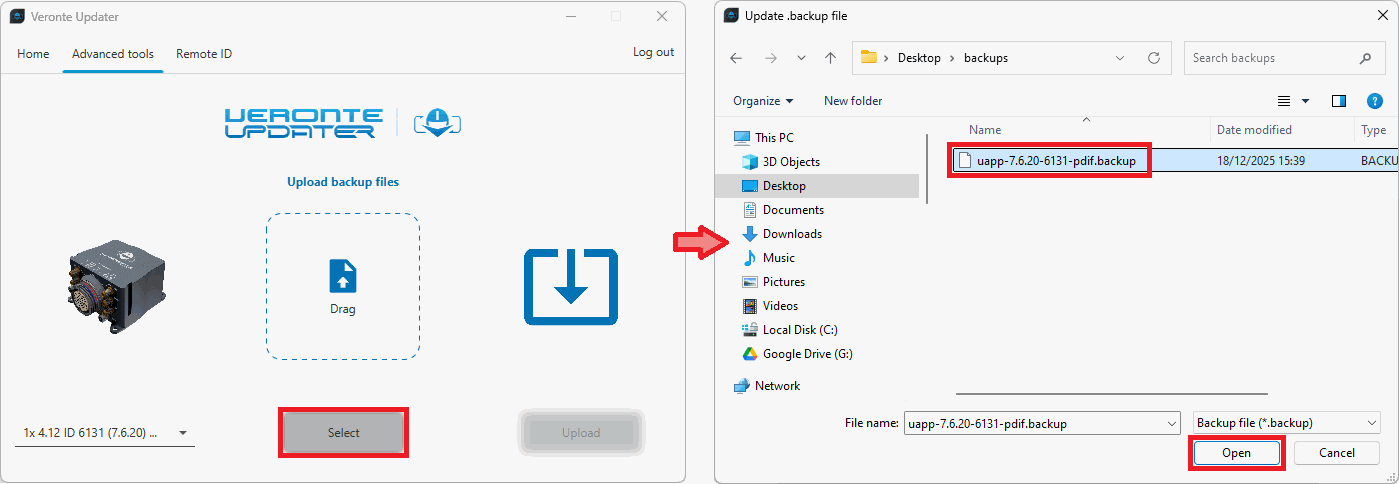
Upload backup - Select .backup file -
Once the .backup file is loaded, click on Update to send the configuracion to the device.
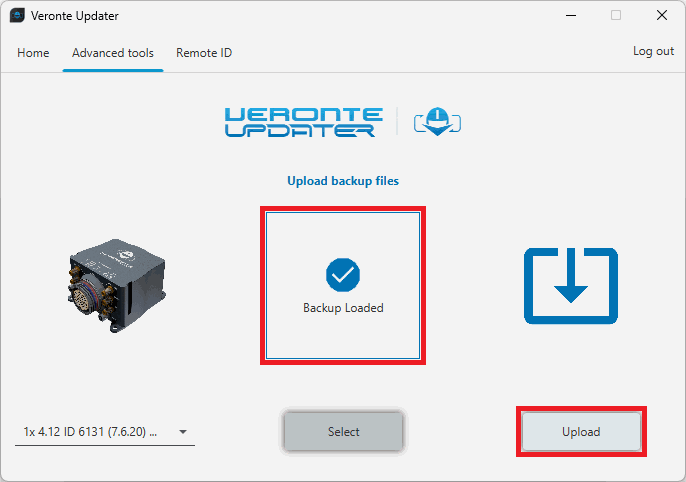
Upload backup - Upload -
Once the process, finish, click on Done.
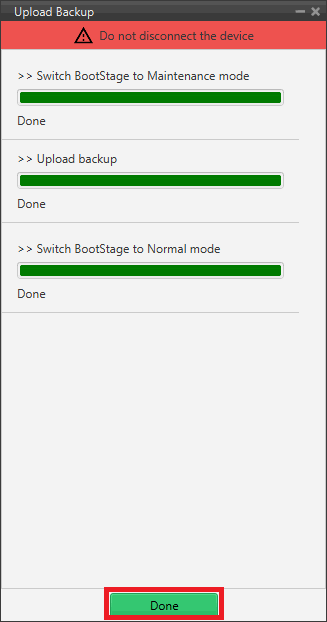
Upload backup process
Switch BootStage
With this option, users can switch between the modes shown in the drop-down menu.
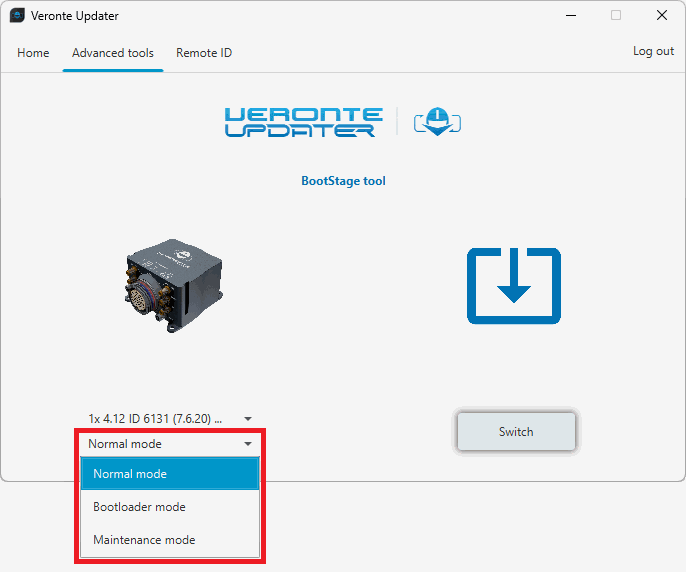
- Normal mode
- Bootloader mode: This is the mode a device must be in to be updated.
- Maintenance mode
Select the desired mode to switch to and click Switch:
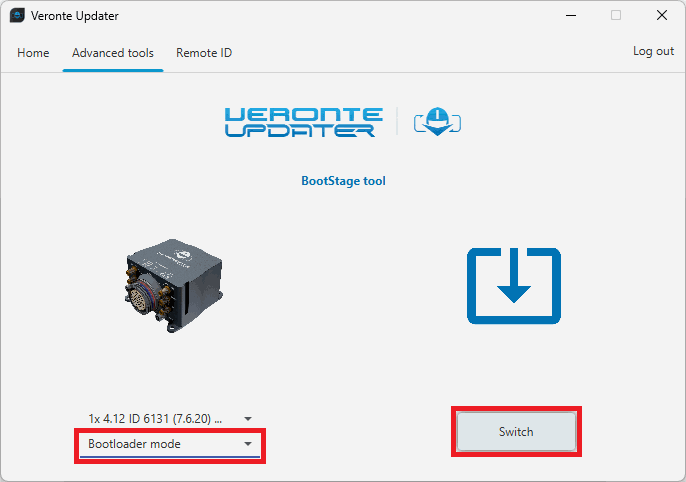
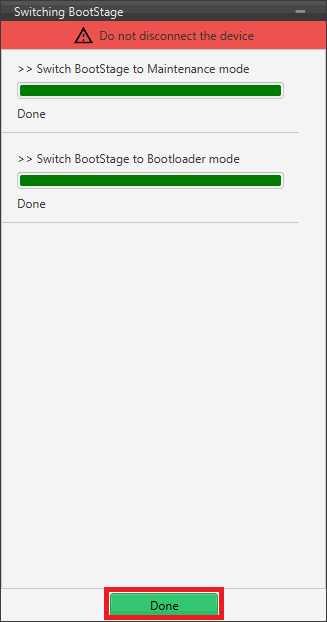
Once the process, finish, click on Done.
Identify SD
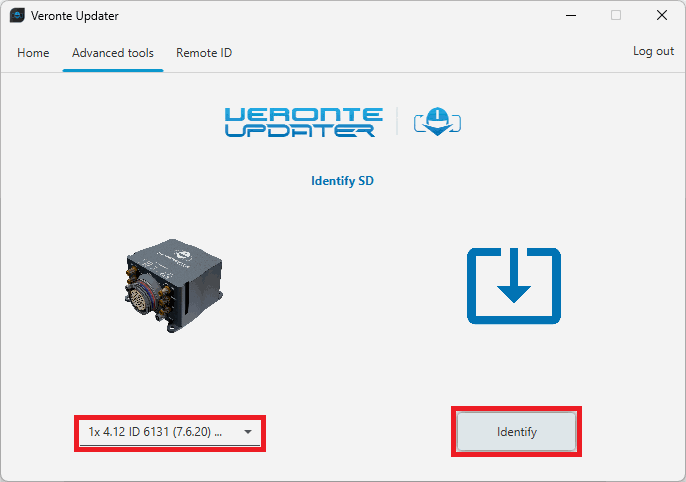
Selecting this option will identify the file memory capacity of the connected device.
Simply select the unit to be indentified and click Identify:
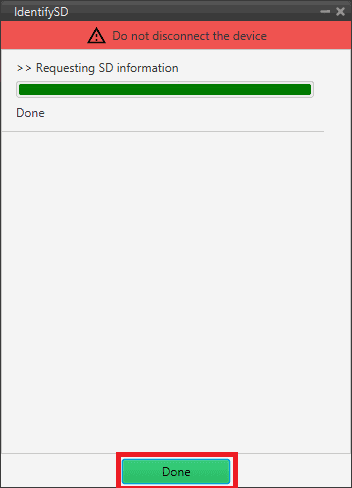
As the identification process is quite fast, a message with the information about the capacity of the SD card will quickly appear:
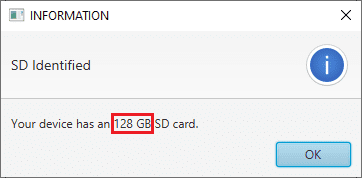
Finally click on Done:
Upload partition data
Warning
THIS IS NOT PART OF THE UPGRADE PROCESS.
Veronte Updater shall require the user to carry out this action in the event that the device's file memory has no magnetic field and geoid data.
Follow the steps below to upload the needed partition data:
-
Simply select the desired unit, choose Magnetic field, Geoid or Custom SRTM.
If Custom SRTM option is selected, users must first load a
.7zfile. There are two ways to do this, dragging the file to the Drag area or by using the Select button. The latter option will open the following browser to select the .7z file stored in the user's local storage: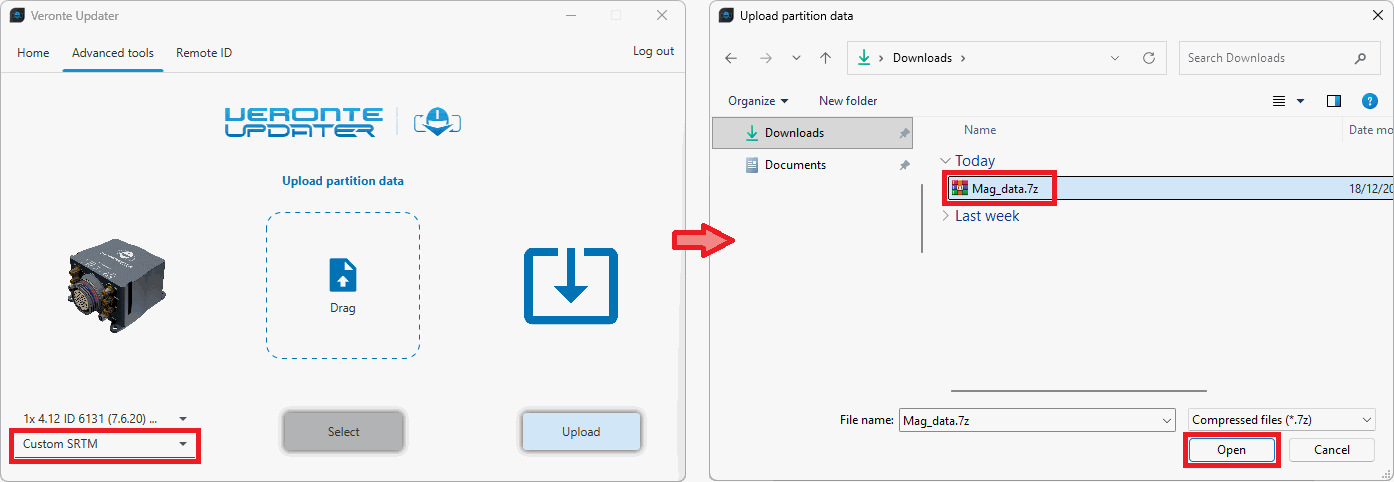
Upload partition data - Select .7z file Then, once the
.7zfile has been loaded or the Magnetic field or Geoid options have been selected, click Upload: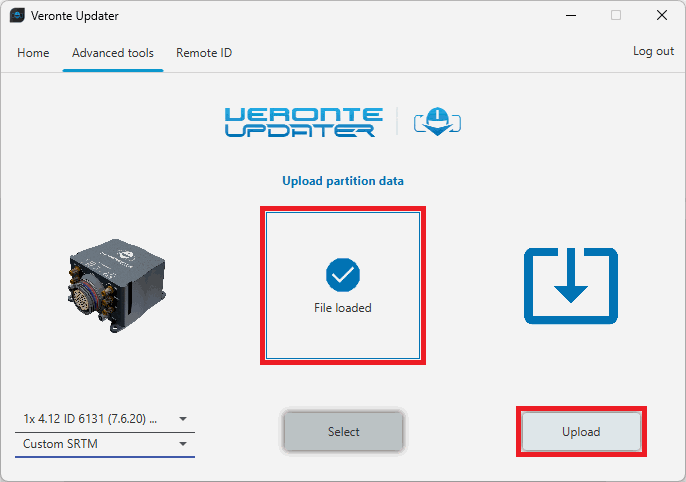
Upload partition data - Upload Note
The process carried out only uploads the chosen data (Magnetic field, Geoid or Custom SRTM). Repeat the process for uploading the remaining data.
-
If the device already has the data to be uploaded, a window will pop up to confirm continuing with the process.
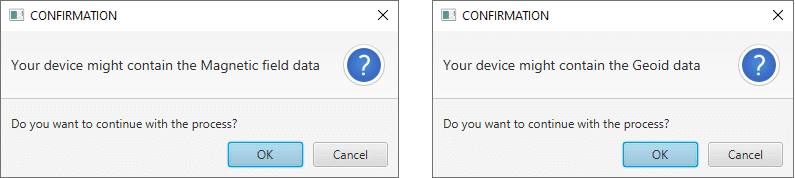
Upload partition data - Process confirmation -
Once confirmed, the uploading process will start and the following window will show the progress.
Warning
Writting file step is a long and slow process that can take a few hours.
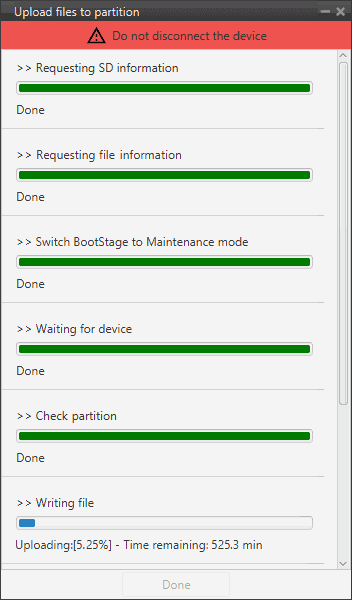
Upload partition data - Uploading process
When finished, click on Done.
© 2026 Embention. All rights reserved.